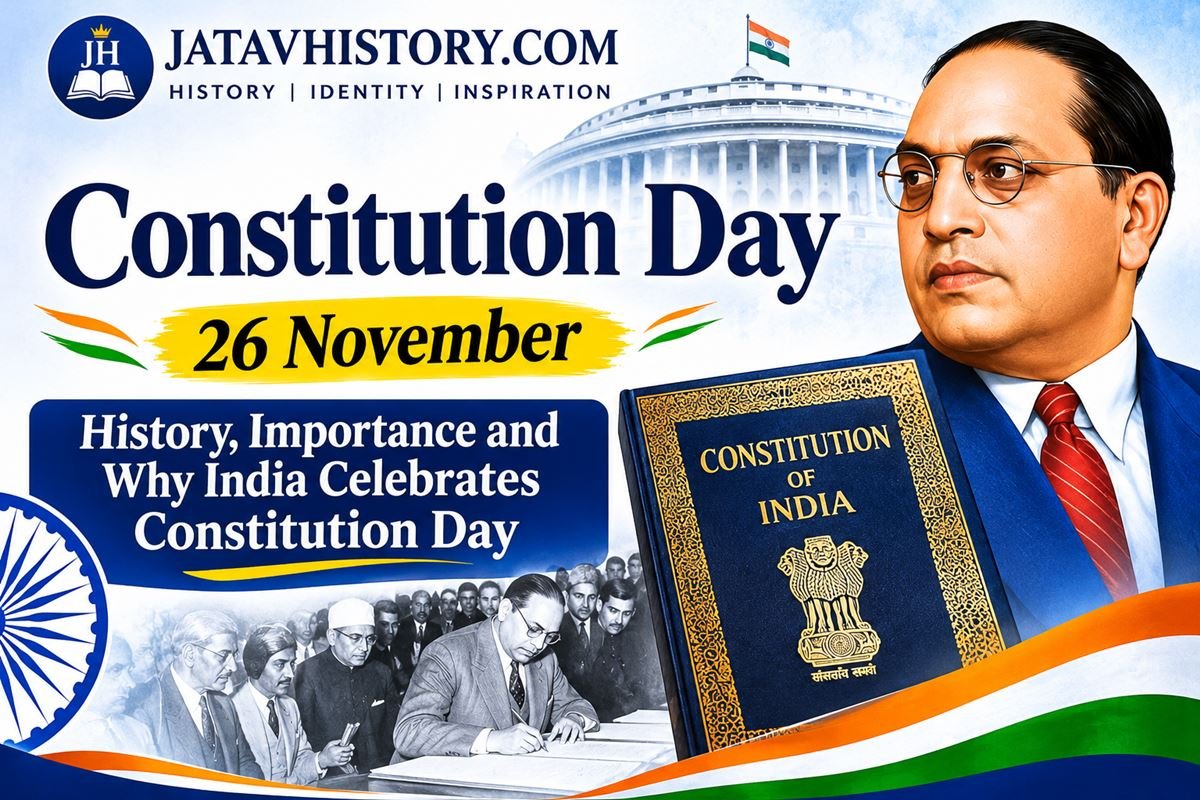
The Constitution is one of the most important documents in the history of independent India. It explains how the country should be governed and protects the rights and freedoms of its citizens. It also gives a common legal foundation to people from different states, languages, religions and communities.
Many people know about Independence Day and Republic Day, but Constitution Day has its own special importance. It connects us with the hard work, discussions and vision of the leaders who helped prepare the Indian Constitution.
In this article, we will understand the history of Constitution Day 2026, why 26 November was selected, the role of Dr. B. R. Ambedkar and why every Indian should know about this important day.
- 26 November 1949: The Constituent Assembly adopted the Constitution of India.
- 26 January 1950: The Constitution came into force.
- 19 November 2015: The Government of India notified 26 November as Constitution Day.
What Is Constitution Day in India?
Constitution Day is observed in India every year on 26 November. It is also called Samvidhan Divas in Hindi. The day marks the adoption of the Constitution by the Constituent Assembly on 26 November 1949.
The Constitution was not brought into force on the same day. It came into effect on 26 January 1950. This is why India celebrates 26 January as Republic Day and 26 November as Constitution Day.
The main purpose of this day is to spread awareness about the Constitution and encourage citizens to understand its values. These values include justice, liberty, equality and fraternity.
Constitution Day is not only a government event. It is relevant to every Indian because the Constitution affects our everyday lives, from our fundamental rights to the working of public institutions.
Why Is Constitution Day Celebrated on 26 November?
The date 26 November has a direct connection with the making of modern India. On this day in 1949, after detailed discussions and debates, the Constituent Assembly adopted the Constitution of India.
The members of the Assembly had spent a long time discussing how independent India should be governed. They considered subjects such as citizens' rights, the powers of government, equality before law, social justice and the future of democracy.
The adoption of the Constitution was a major step in the journey of the country. It provided a legal and democratic framework for a newly independent nation with great social, cultural and linguistic diversity.
The Government of India later decided to observe 26 November every year as Constitution Day. The decision was officially notified in November 2015.
History of Constitution Day: When Did It Start?
The Constitution of India was adopted in 1949, but the annual observance of Constitution Day started much later.
In 2015, the Government of India decided to celebrate 26 November as Constitution Day. The year was also the 125th birth anniversary year of Dr. B. R. Ambedkar, who chaired the Drafting Committee of the Constituent Assembly.
On 19 November 2015, the Ministry of Social Justice and Empowerment issued the official notification declaring 26 November as Constitution Day. The decision aimed to promote constitutional values among citizens and recognise the contribution of the makers of the Constitution.
Since then, schools, colleges, government offices and other institutions have marked the day through different activities. These may include reading the Preamble, organising discussions, conducting quizzes and explaining constitutional rights and duties.
Dr. B. R. Ambedkar's Role in the Indian Constitution
Any discussion about the Indian Constitution is incomplete without mentioning Dr. Bhimrao Ramji Ambedkar. He was the Chairman of the Drafting Committee of the Constituent Assembly and played a major role in shaping the final constitutional text.
Dr. Ambedkar strongly believed that political democracy should be supported by social democracy. He wanted a society where people could enjoy equality, dignity and equal opportunities. His work and ideas remain important when we discuss the Constitution and social justice in India.
The Constitution was the result of the collective work of the Constituent Assembly. Many members contributed through debates, suggestions and discussions. Dr. Ambedkar's leadership of the Drafting Committee was one of the most significant parts of this process.
To understand his contribution in more detail, read our separate article: Dr. B. R. Ambedkar's Role in Making the Indian Constitution .
What Are the Main Values of the Indian Constitution?
The Preamble introduces the basic ideals of the Constitution. It begins with the words "We, the People of India" and explains the kind of country that the people have resolved to build.
Some of its most important values are:
1. Justice
The Constitution aims to secure social, economic and political justice. It provides a framework for a society where people should not face unfair treatment and where the law has an important role in protecting their rights.
2. Liberty
Liberty refers to freedom of thought, expression, belief, faith and worship. These freedoms are important for individuals to live with dignity and participate in society.
3. Equality
Equality means that every person deserves equal respect and protection under the law. The Constitution also allows special provisions for disadvantaged sections to address historical and social inequalities.
4. Fraternity
Fraternity means a sense of brotherhood among people. It supports the dignity of every individual and the unity and integrity of the nation.
You can read the complete explanation in our guide: Preamble of the Indian Constitution: Meaning and Importance .
Why Is Constitution Day Important for Every Indian?
Constitution Day is important because it reminds citizens that democracy is not limited to voting in elections. It also depends on respect for the law, awareness of rights, responsible conduct and equal treatment of people.
Here are some reasons why this day matters:
- Awareness of rights: It encourages people to learn about their Fundamental Rights and legal protections.
- Knowledge of duties: It reminds citizens that the Constitution also mentions Fundamental Duties.
- Respect for democracy: It helps people understand democratic institutions and the rule of law.
- Social equality: It brings attention to constitutional principles that support equality and dignity.
- Remembering the makers: It recognises the collective efforts of the Constituent Assembly and its members.
How Is Samvidhan Divas Celebrated in India?
Schools, colleges, universities and government institutions observe Samvidhan Divas in different ways. The activities are generally designed to help people understand the Constitution rather than simply remember a date.
Common activities include:
- Reading the Preamble of the Constitution.
- Organising Constitution Day speeches and essay competitions.
- Conducting quizzes on Indian constitutional history.
- Holding discussions about Fundamental Rights and Duties.
- Organising awareness programmes in schools and colleges.
- Sharing information about Dr. B. R. Ambedkar and other members of the Constituent Assembly.
Students can also prepare a short speech or essay for the occasion. For ideas and a ready-to-use student-friendly guide, visit: Constitution Day Speech and Essay in English .
Constitution Day and Republic Day: What Is the Difference?
People sometimes confuse Constitution Day with Republic Day because both are connected with the Indian Constitution. However, the two days remember different historical events.
| Point | Constitution Day | Republic Day |
|---|---|---|
| Date | 26 November | 26 January |
| Historical event | Constitution adopted | Constitution came into force |
| Year | 1949 | 1950 |
| Annual observance | Constitution Day / Samvidhan Divas | Republic Day |
In simple words, the Constituent Assembly adopted the Constitution on 26 November 1949. It became effective on 26 January 1950, marking the beginning of India as a republic under its Constitution.
What Can Students Do on Constitution Day 2026?
Students can use Constitution Day as an opportunity to learn something useful about the country. They do not need to prepare a very long programme. Even a small classroom activity can help spread awareness.
- Read the Preamble and understand its main words.
- Prepare a short speech on Constitution Day.
- Write an essay about the importance of the Constitution.
- Learn about Dr. B. R. Ambedkar and the Drafting Committee.
- Discuss Fundamental Rights and Fundamental Duties.
- Take part in a Constitution-related quiz or debate.
Teachers can also explain why the Constitution protects equality, freedom and dignity. These ideas become easier to understand when students connect them with situations from daily life.
Important Articles of the Constitution You Should Know
The Constitution contains many provisions that affect the lives of citizens. Some articles are especially important when discussing equality, social justice and protection from discrimination.
- Article 14: Equality before law and equal protection of laws.
- Article 15: Prohibition of discrimination on specified grounds and provisions for certain groups.
- Article 16: Equality of opportunity in matters of public employment.
- Article 17: Abolition of untouchability.
- Article 21: Protection of life and personal liberty.
- Article 341: Identification of Scheduled Castes for constitutional purposes.
Read more about these topics in our detailed guides:
- Article 17: Abolition of Untouchability
- Six Fundamental Rights in India
- Reservation in the Indian Constitution
- Article 341: Recognition of Scheduled Castes
- Constitutional Safeguards for SC and ST Communities
Frequently Asked Questions About Constitution Day
1. When is Constitution Day celebrated in India?
Constitution Day is celebrated every year on 26 November to remember the adoption of the Indian Constitution in 1949.
2. Why is 26 November celebrated as Constitution Day?
On 26 November 1949, the Constituent Assembly adopted the Constitution of India. This is why the date is observed as Constitution Day.
3. What is Samvidhan Divas?
Samvidhan Divas is the Hindi name for Constitution Day. It is observed on 26 November every year in India.
4. Samvidhan Divas kab manaya jata hai?
Samvidhan Divas har saal 26 November ko manaya jata hai. Is din 1949 mein Constituent Assembly ne Bharat ka Samvidhan adopt kiya tha.
5. When did the Indian Constitution come into force?
The Constitution of India came into force on 26 January 1950. This date is celebrated as Republic Day.
6. Who is known as the chief architect of the Indian Constitution?
Dr. B. R. Ambedkar is widely known as the chief architect of the Indian Constitution. He chaired the Drafting Committee of the Constituent Assembly.
7. Since when has India celebrated Constitution Day?
India has officially observed 26 November as Constitution Day since 2015.
8. What is the importance of Constitution Day?
Constitution Day spreads awareness about constitutional values, citizens' rights and duties, democracy, equality and justice.
9. What is the difference between Constitution Day and Republic Day?
Constitution Day marks the adoption of the Constitution on 26 November 1949. Republic Day marks the date it came into force on 26 January 1950.
10. How can schools celebrate Constitution Day?
Schools can organise Preamble readings, speeches, essay competitions, quizzes and discussions about Fundamental Rights and Duties.
Final Words
Constitution Day is a reminder that the Constitution belongs to the people of India. It gives the country a common framework for democracy, protects important rights and sets out values that guide public life.
On 26 November 2026, we will once again remember the historic adoption of the Constitution. But the real meaning of this day goes beyond a yearly celebration. Understanding the Constitution and respecting its values should be part of our everyday lives.
Every citizen should make an effort to know the Constitution, understand their rights and perform their duties responsibly. This is one meaningful way to honour the people who helped build the constitutional foundation of India.
Official Sources and Further Reading
Explore More About the Indian Constitution
Continue reading our Constitution series to understand the history, rights and safeguards provided by the Constitution of India.
- Dr. B. R. Ambedkar's Role in the Indian Constitution
- Preamble of the Indian Constitution
- Article 17 – Abolition of Untouchability
- Fundamental Rights in India
- Reservation in the Indian Constitution
- Article 341 – Scheduled Castes
- Constitutional Safeguards for SC and ST
- How Was the Indian Constitution Written?
- Constitution Day Speech and Essay in English