
 as

How to Research Your Jatav Family History: A Step-by-Step Guide
A practical step-by-step method for researching family history using interviews, certificates, local archives, newspapers and responsibly verified records.
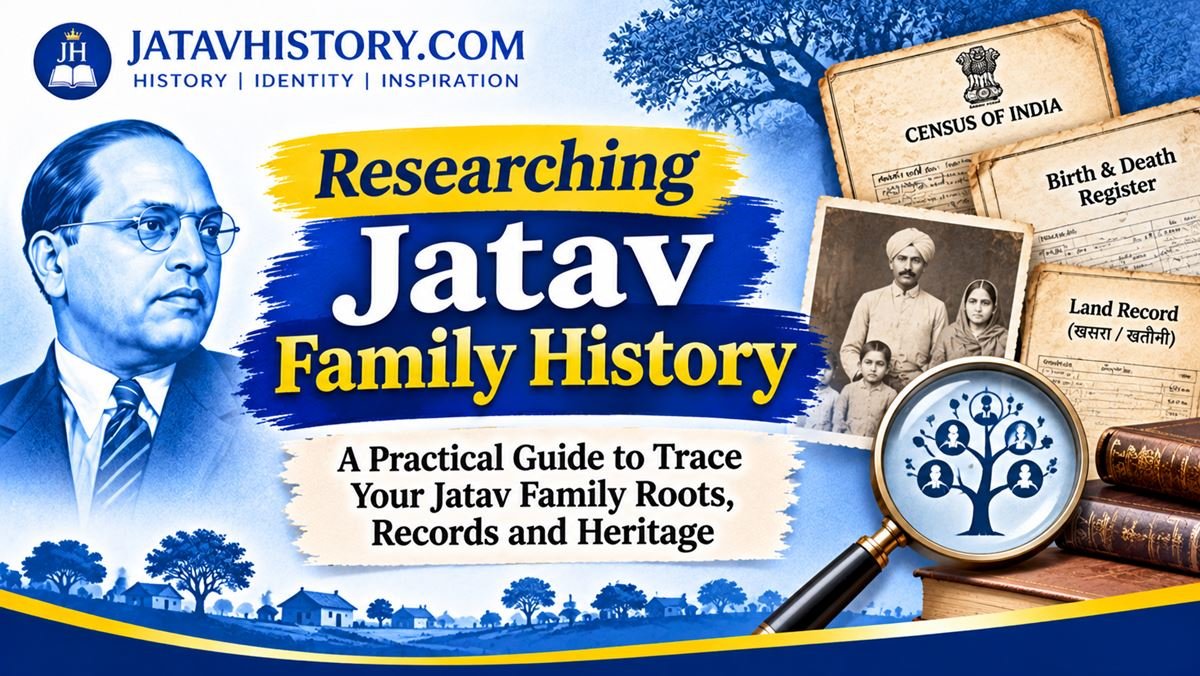
This guide provides a practical workflow for families researching Jatav ancestry and local history. Keep original documents safe and protect private information about living relatives.
Step 1: Interview relatives respectfully
Ask relatives about names, spelling variants, places lived, occupations, schools, migration and important events. Record who shared each memory and whether it is firsthand or inherited. Ask permission before recording or publishing an interview.

Step 2: Build a family timeline
Create a table of names, approximate dates, locations and relationships. Mark uncertain dates as approximate and keep conflicting accounts rather than choosing one without evidence.
Step 3: Gather family documents
Review certificates, letters, photographs, school records, service papers, property documents and family registers. Scan documents clearly, label files with dates and preserve the originals.
Step 4: Search local and public records
Depending on the period and location, relevant records may include civil registration, district archives, gazetteers, electoral records, newspapers, school archives and institutional collections. Availability and access rules vary.
Step 5: Verify identity links
A matching name does not always mean the same person. Compare dates, places, relatives, occupation and other non-sensitive details before linking records together.
Step 6: Organise evidence and citations
For every claim, record the source, date, location, page or archive identifier and what it supports. Separate documentary facts from family interpretation and unanswered questions.
Step 7: Protect privacy and share carefully
Do not publish identity numbers, private addresses, signatures or sensitive records of living people. Ask consent and consider whether a detail could expose a relative to harm or unwanted attention.
Frequently Asked Questions
What is the best first step?
Interview relatives with consent and build a timeline of names, places and approximate dates.
What if records disagree?
Keep both versions, compare their sources and explain what remains unresolved.
Can I publish family documents online?
Only after considering consent, privacy, copyright and the risks of exposing personal information.
Sources and Further Reading
Use these official and research portals as starting points. Search for the specific document or publication that supports each claim; a portal homepage alone does not verify a particular statement.
- Ministry of Social Justice and Empowerment — official policies and publications.
- India Code — legislation and legal texts.
- National Archives of India — archival research starting point.
- Google Books — discover digitised books and bibliographies; verify the edition and page.
Editorial note: This guide explains research methods and does not claim that every historical detail has been independently established here. Add direct citations to specific records before publishing any precise date, statistic or attribution.

Written by Himanshu Singh
JatavHistory.com shares educational resources on Jatav and Dalit history, with an emphasis on source-checking, historical context and respectful representation.