
 as

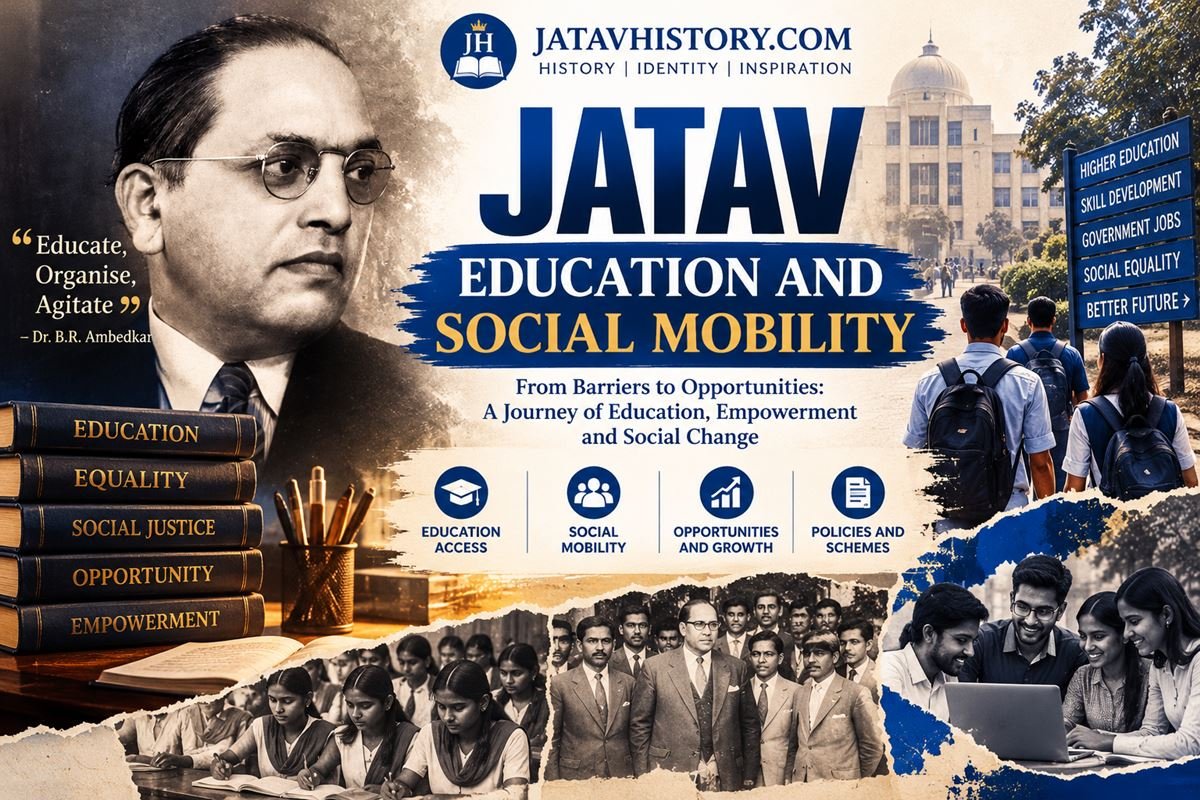
Education and Social Mobility in the Jatav Community: Research and Evidence
A practical guide to studying education and social mobility in Jatav communities using census material, surveys, school records and academic research.
This article is a research framework, not a claim that one statistic describes every Jatav family or every state. Use region-specific data and clearly identify the period being studied.
Define the question before collecting data
Decide whether you are studying school enrolment, literacy, completion, higher education, occupation or intergenerational mobility. These are different outcomes and should not be combined into one vague claim about progress.

Use data carefully
Census tables, government surveys, education department reports and peer-reviewed studies may offer relevant indicators. Check the year, sample, geography, definitions and whether the data identifies Jatav people specifically. If it only reports Scheduled Castes as a whole, do not present it as Jatav-only data.
Look beyond headline numbers
A rise in enrolment does not automatically show that students complete school or enter higher education. Consider gender, rural and urban differences, household income, transport, school quality, discrimination and access to digital resources where evidence is available.
Family and community records
School registers, certificates, alumni publications, local biographies and oral histories may help document individual pathways. Obtain permission before publishing private information, especially about living people.
Present a balanced conclusion
State what the sources show, what they cannot show and which questions remain open. Avoid presenting individual success stories as proof that structural barriers have disappeared, or using a single setback to describe an entire community.
Frequently Asked Questions
Can national literacy data prove Jatav literacy rates?
Not by itself. Use data that specifically measures the group and geography in question, or clearly label broader Scheduled Caste data as broader data.
What is social mobility?
It refers to changes in a person’s or family’s social and economic position, often examined through education, occupation, income and opportunities across generations.
Are biographies useful evidence?
They can document individual experiences, but they do not replace representative data or independent corroboration.
Sources and Further Reading
Use these official and research portals as starting points. Search for the specific document or publication that supports each claim; a portal homepage alone does not verify a particular statement.
- Ministry of Social Justice and Empowerment — official policies and publications.
- India Code — legislation and legal texts.
- National Archives of India — archival research starting point.
- Google Books — discover digitised books and bibliographies; verify the edition and page.
Editorial note: This guide explains research methods and does not claim that every historical detail has been independently established here. Add direct citations to specific records before publishing any precise date, statistic or attribution.

Written by Himanshu Singh
JatavHistory.com shares educational resources on Jatav and Dalit history, with an emphasis on source-checking, historical context and respectful representation.