
 as

Jatav Surnames: Regional Usage, Family Records and Historical Evidence
A careful guide to researching Jatav surnames, spelling variations and family documents without making unsupported claims about ancestry or caste identity.
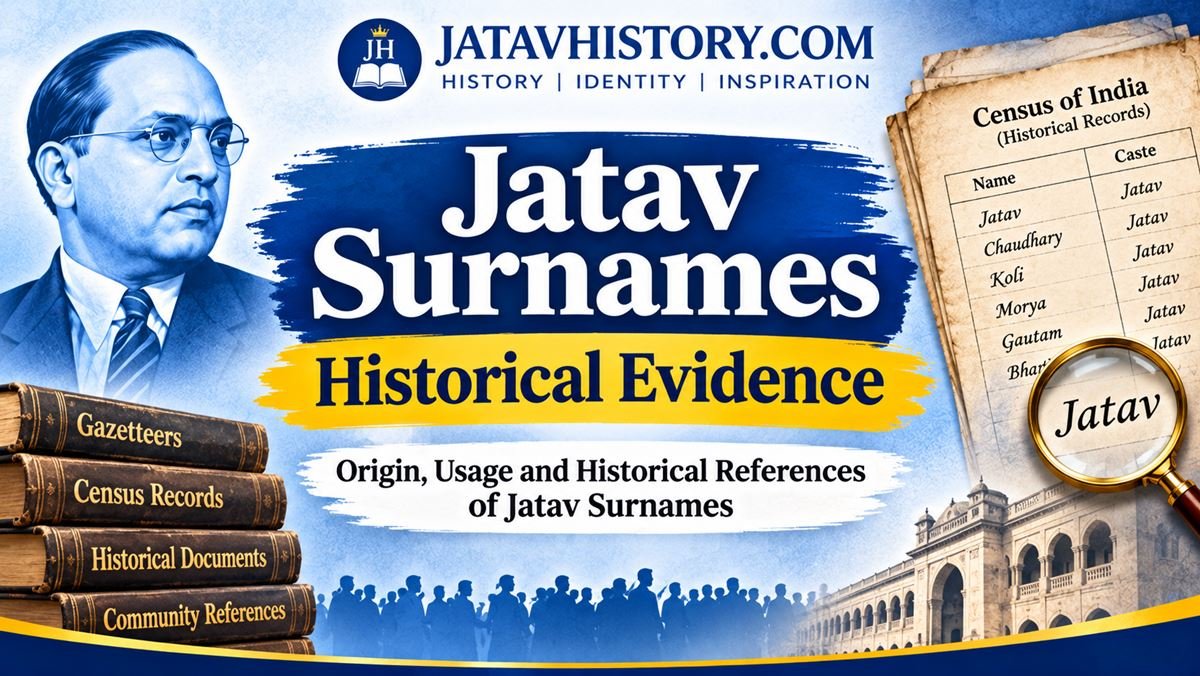
This guide focuses on research methods. It does not present a definitive list of surnames exclusive to Jatav people, because surname use can overlap across communities and regions.
Why surnames need context
The same surname may be used by different families or communities, and the same family may appear under different spellings in separate records. Treat a surname as a search clue, not a conclusion.

Compare family documents over time
Birth and marriage records, school certificates, land documents, voter lists, service records and letters may help trace name variants. Check dates, locations and relationships rather than relying on a name match alone.
Record spelling variants
Write down exact spellings from each source, including transliterations between scripts. Do not silently standardise an old document if the original spelling is relevant to the research.
Avoid unsupported origin claims
A surname etymology or online list may be interesting but is not proof of a family’s lineage. Seek linguistic, archival or scholarly support and state uncertainty where the evidence is incomplete.
Protect living relatives
Family records can include private information. Ask permission before publishing personal documents, redact sensitive identifiers and consider the impact on living family members.
Make a family evidence table
Record the person, name variant, date, place, relationship, source and confidence level. Keep assumptions separate from facts transcribed from documents.
Frequently Asked Questions
Can a surname prove someone is Jatav?
No. A surname alone is not definitive proof of caste or ancestry.
Why does one person have multiple spellings?
Records may reflect transliteration, local pronunciation, clerical choices or changes made by the family.
Are online surname lists reliable?
Use them as leads only. Check their methodology and supporting evidence before relying on them.
Sources and Further Reading
Use these official and research portals as starting points. Search for the specific document or publication that supports each claim; a portal homepage alone does not verify a particular statement.
- Ministry of Social Justice and Empowerment — official policies and publications.
- India Code — legislation and legal texts.
- National Archives of India — archival research starting point.
- Google Books — discover digitised books and bibliographies; verify the edition and page.
Editorial note: This guide explains research methods and does not claim that every historical detail has been independently established here. Add direct citations to specific records before publishing any precise date, statistic or attribution.

Written by Himanshu Singh
JatavHistory.com shares educational resources on Jatav and Dalit history, with an emphasis on source-checking, historical context and respectful representation.