
 as

Jatav Social Reform Movements: Education, Organisation and Equality
A research guide to documenting social reform, education initiatives, community organisations and equality campaigns in Jatav history.
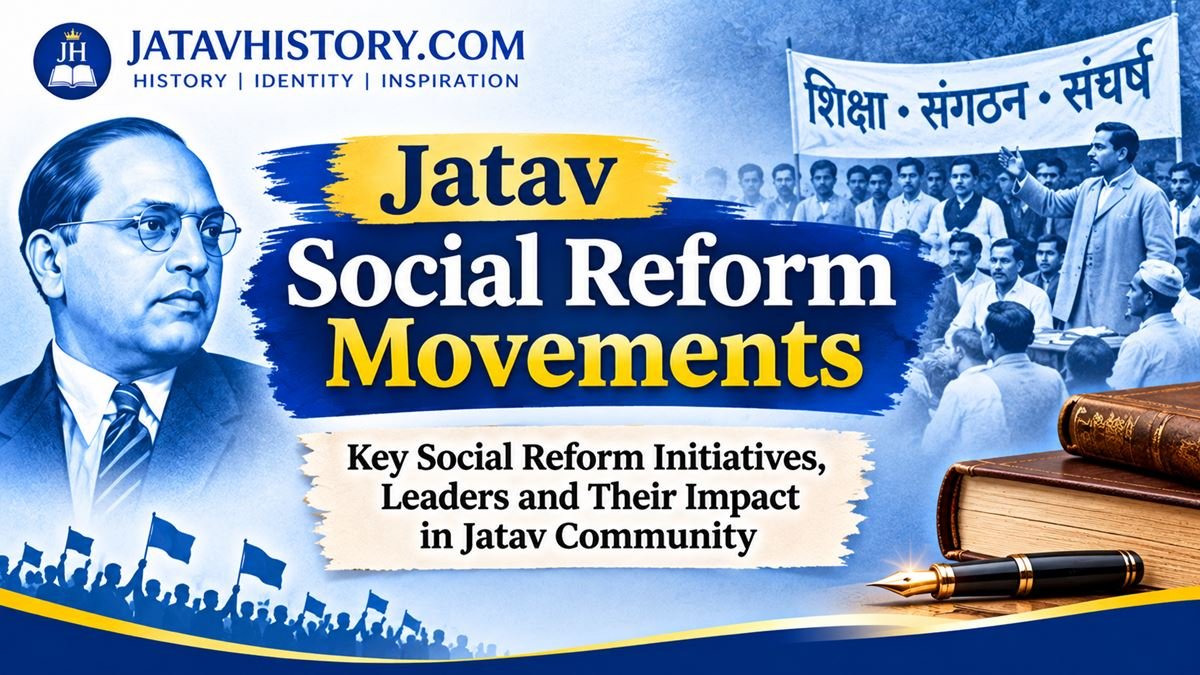
This article offers a framework for investigating reform activity without assuming that every region experienced the same timeline or that one organisation represented every member of the community.
Define the movement being studied
Clarify whether the topic concerns education, anti-discrimination campaigns, political representation, community associations, religious reform or another area. A clear definition prevents unrelated events from being grouped together.

Find organisations and their records
Look for constitutions, membership notices, meeting minutes, newsletters, pamphlets, event programmes and anniversary publications. Record the organisation’s name as it appeared at the time and note later name changes.
Document individuals with care
Biographies should use verifiable dates, locations and roles. Distinguish a person’s documented public activity from later praise or claims. Cross-check names across sources because transliteration and spelling can vary.
Education and public participation
Schools, libraries, hostels, study circles and local associations may provide evidence of reform work. Use school records, institutional histories, newspapers and oral histories where available; avoid inventing dates or attributing institutions without evidence.
Understand regional differences
The timing, language, organisations and political context of reform may differ by district and state. A local case study should not be generalised to all Jatav communities without comparative evidence.
Build an annotated timeline
For each event, record the date, place, actors, type of activity, source and confidence level. A timeline with citations is more useful than a list of unsupported milestones.
Frequently Asked Questions
What counts as a social reform movement?
A documented collective effort to change social practices, expand access or address inequality. Define the movement and cite the evidence for its activities.
Can community publications be used as sources?
Yes. Identify their publisher, date, purpose and possible viewpoint, and compare important claims with other records.
Should local reformers be included?
Yes, when their role can be documented. Local archives and oral histories can complement published histories.
Sources and Further Reading
Use these official and research portals as starting points. Search for the specific document or publication that supports each claim; a portal homepage alone does not verify a particular statement.
- Ministry of Social Justice and Empowerment — official policies and publications.
- India Code — legislation and legal texts.
- National Archives of India — archival research starting point.
- Google Books — discover digitised books and bibliographies; verify the edition and page.
Editorial note: This guide explains research methods and does not claim that every historical detail has been independently established here. Add direct citations to specific records before publishing any precise date, statistic or attribution.

Written by Himanshu Singh
JatavHistory.com shares educational resources on Jatav and Dalit history, with an emphasis on source-checking, historical context and respectful representation.