
 as

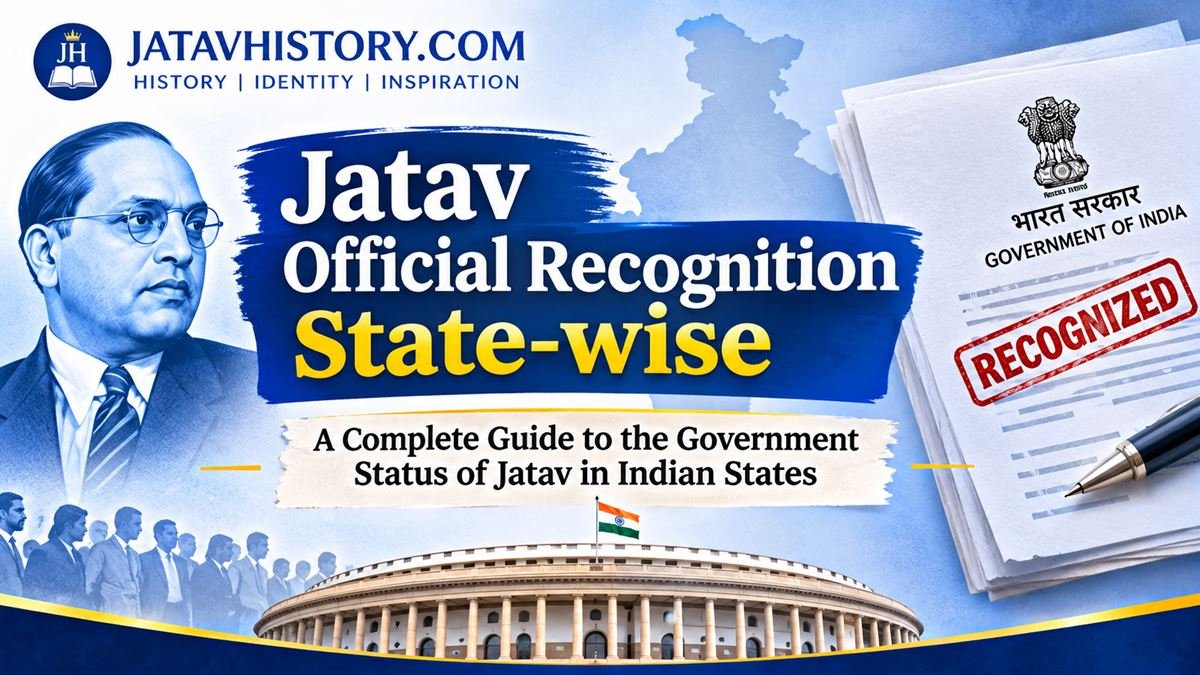
Jatav Community: Official Recognition and State-Wise Records
Learn how to verify Jatav or Jatava entries in official Scheduled Caste lists and why legal recognition must be checked against current state-specific records.
This page is an educational guide, not legal advice. It does not replace an official certificate authority’s decision or a review of the current rules applicable to an individual case.
Why state and location matter
Scheduled Caste recognition in India is governed through constitutional orders and entries applicable to specified states or union territories. A community name, spelling or entry may not be interchangeable across jurisdictions. Verify the relevant state and the exact wording of the entry.

Use official sources first
Start with the Ministry of Social Justice and Empowerment, India Code and the relevant state government or competent certificate authority. Look for the current order, amendments and official instructions rather than relying only on summaries.
Match the exact name and entry
Check spelling variants, synonyms, territorial notes and any conditions included in the official entry. Do not assume that similar-sounding community names are legally identical.
Separate historical identity from legal eligibility
Historical usage, family tradition and legal recognition are related but distinct questions. A historical document may help with research but does not by itself determine eligibility for a present-day certificate or benefit.
How to verify a case responsibly
Identify the relevant state or union territory, locate the current official list or order, check amendments, then confirm document requirements with the competent local authority. For a dispute, seek qualified legal advice.
Keep information current
Legal lists and administrative procedures can change. Display a reviewed date only after checking the official source, and link directly to the document relied on.
Frequently Asked Questions
Can I use a list from another state?
Do not assume it applies. Check the official entry and rules for the state or union territory relevant to the case.
Does a website article guarantee certificate approval?
No. The competent authority decides based on applicable law and required documents.
Where should I verify the current list?
Use official central government publications, India Code and the relevant state government or certificate authority.
Sources and Further Reading
Use these official and research portals as starting points. Search for the specific document or publication that supports each claim; a portal homepage alone does not verify a particular statement.
- Ministry of Social Justice and Empowerment — official policies and publications.
- India Code — legislation and legal texts.
- National Archives of India — archival research starting point.
- Google Books — discover digitised books and bibliographies; verify the edition and page.
Editorial note: This guide explains research methods and does not claim that every historical detail has been independently established here. Add direct citations to specific records before publishing any precise date, statistic or attribution.

Written by Himanshu Singh
JatavHistory.com shares educational resources on Jatav and Dalit history, with an emphasis on source-checking, historical context and respectful representation.