
 as

Jatav Community and the Ambedkarite Movement: History, Ideas and Context
Explore how to study Jatav community history alongside the Ambedkarite movement through documented organisations, publications, public events and historical context.
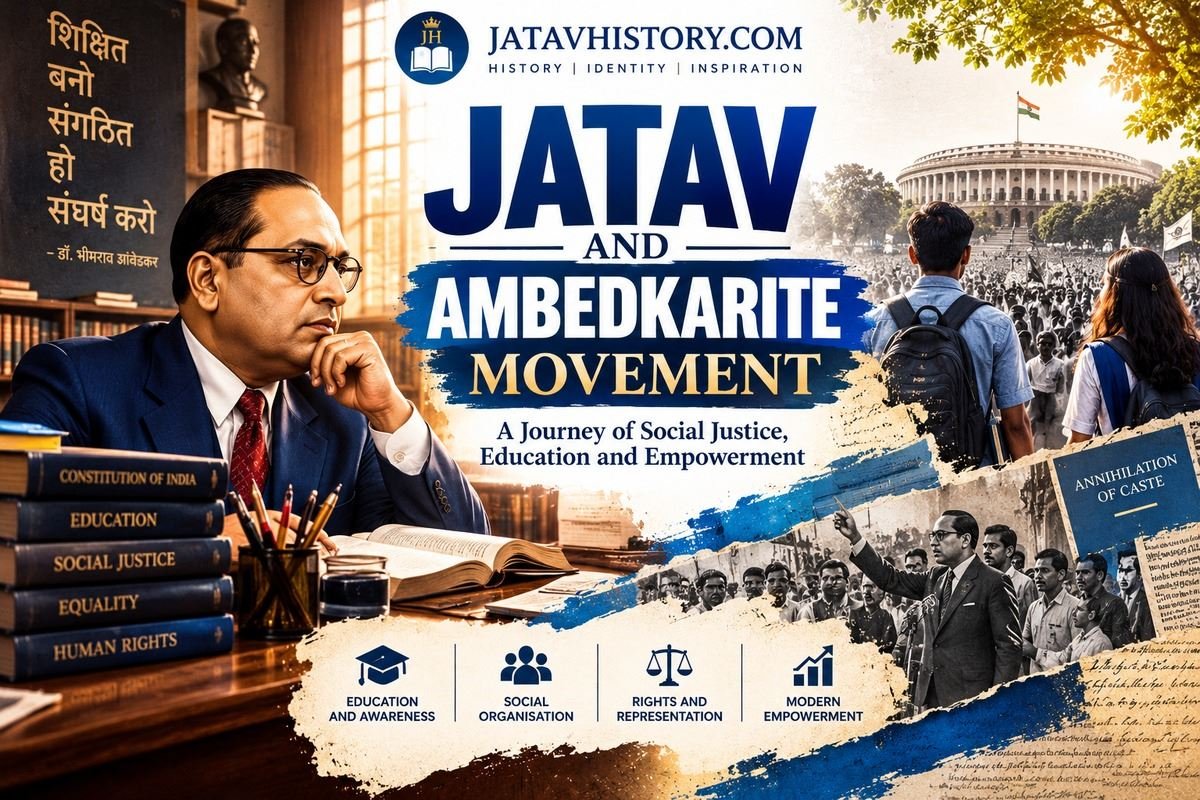
This guide explains a careful method for studying that relationship. It distinguishes the wider movement’s documented principles from the local histories, associations and individual experiences that need their own evidence.
What does Ambedkarite mean in historical research?
The term generally refers to movements, organisations and public thought influenced by Dr. B. R. Ambedkar’s work on social equality, representation, education and constitutional democracy. Its use can vary across time and place, so articles should define the term being used and identify the people or organisations being discussed.

How to document local participation
Look for dated meeting notices, pamphlets, association records, biographies, contemporary newspapers, oral histories and public records. For every named event, record the place, date, organiser and source. Do not infer that a whole community participated because one individual or group is documented.
Ideas, organisations and lived experience
Keep three layers distinct: Ambedkar’s published ideas; organisations or campaigns that explicitly drew on those ideas; and the personal experiences of Jatav individuals and families. These layers may overlap, but they are not interchangeable evidence.
Building a reliable timeline
Start with verifiable milestones and attach a source to each entry. Where a date is uncertain, mark it as approximate or omit it until a reliable record is found. Avoid attributing quotes or slogans without a traceable publication or speech record.
Questions for further research
Which local associations published newsletters? Which schools, libraries or study circles appear in local records? How did activists describe their own aims at the time? What changed between generations? These questions can produce a more specific history than general claims alone.
Frequently Asked Questions
Is the Ambedkarite movement the same in every region?
No. Its ideas have travelled widely, but local organisations, timelines and priorities vary. Regional claims need regional evidence.
How can I verify a claimed historical meeting?
Seek a dated notice, newspaper report, organisational record, photograph with provenance or multiple independent accounts.
Can oral histories be included?
Yes. Identify who gave the account, when it was recorded and whether it is corroborated. Oral history is valuable, but should be labelled accurately.
Sources and Further Reading
Use these official and research portals as starting points. Search for the specific document or publication that supports each claim; a portal homepage alone does not verify a particular statement.
- Ministry of Social Justice and Empowerment — official policies and publications.
- India Code — legislation and legal texts.
- National Archives of India — archival research starting point.
- Google Books — discover digitised books and bibliographies; verify the edition and page.
Editorial note: This guide explains research methods and does not claim that every historical detail has been independently established here. Add direct citations to specific records before publishing any precise date, statistic or attribution.

Written by Himanshu Singh
JatavHistory.com shares educational resources on Jatav and Dalit history, with an emphasis on source-checking, historical context and respectful representation.