
This article explains Jatav caste history in Hindi including origin, gotra, surname, and reservation status in simple words.
The Jatav caste history is an important part of Indian social history. The Jatav community mainly belongs to North India and is widely found in Uttar Pradesh, Rajasthan, Madhya Pradesh, Haryana, Delhi, and nearby regions.
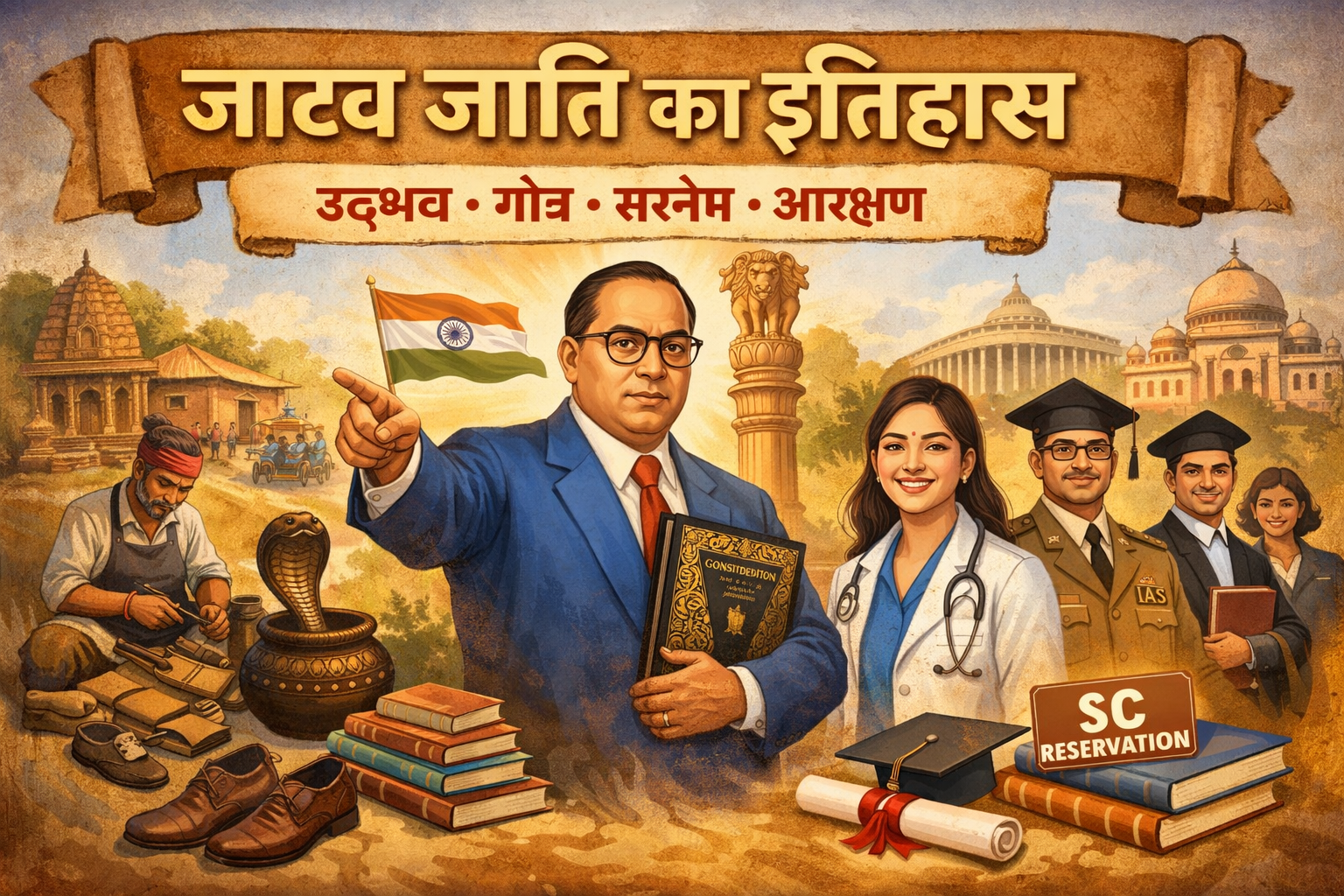
This content is written for students, researchers, and common readers who want clear and honest information about the Jatav community history.
The word Jatav is believed to be derived from the word “Jat” or “Jatva”, which means a strong and organised group. Many historians believe that the Jatav identity was adopted to create self-respect and unity within the community.
Before the British period, Jatavs were grouped under broader occupational castes. During colonial rule, social reform movements encouraged the community to adopt a separate and dignified name. This is how the Jatav identity became popular.
The Jatav community played a key role in social awakening movements inspired by education and equality. Over time, Jatavs moved from traditional occupations to modern professions.
In Hindi literature and social discussions, Jatav history is often linked with the struggle for dignity and equal rights. The community faced discrimination for many centuries but never stopped fighting for justice.
The rise of education, political awareness, and social reform helped the Jatav community redefine its identity in Indian society.
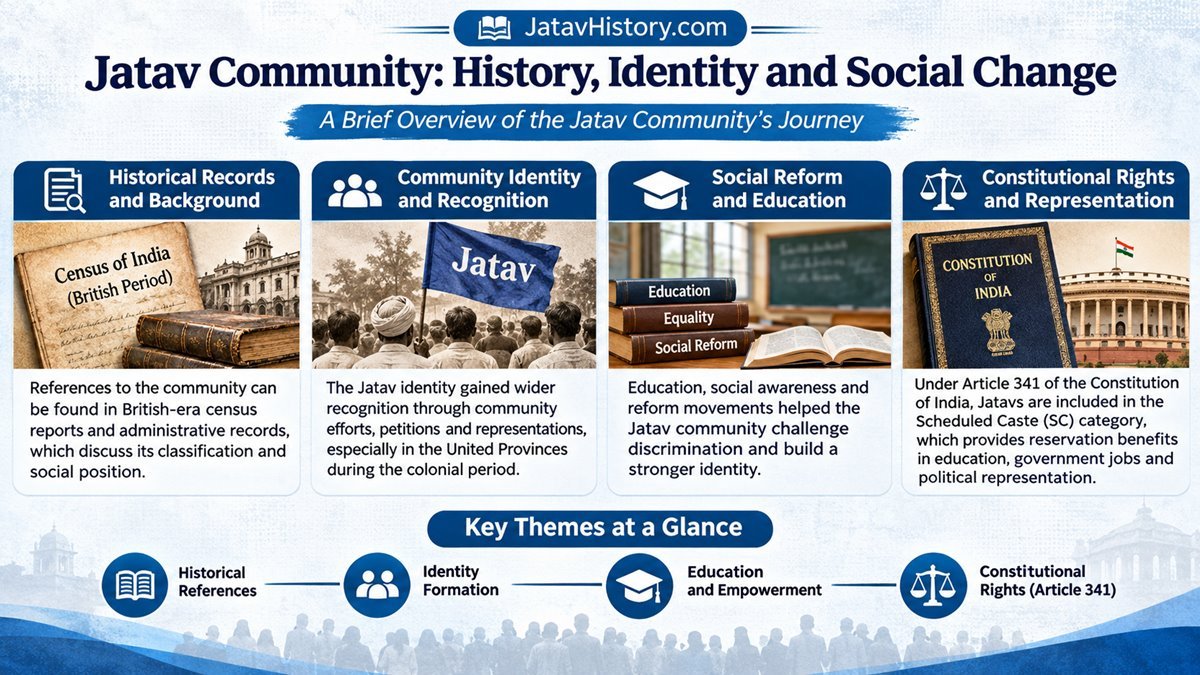
The history of the Jatav community can also be studied through British colonial records, census reports, and administrative documents. These records show that the official classification of Jatavs was not always consistent during the colonial period.
Historian Ian Duncan, in his 2023 research paper published in The Indian Economic & Social History Review, examines the changing administrative classification of Jatavs in the United Provinces, now known as Uttar Pradesh.
The research describes how Jatav representatives sought recognition of their distinct community identity through petitions, public representations, and engagement with colonial administrative institutions.
The paper also discusses the uncertainty surrounding official classification during the 1930s and the legal recognition of Jatavs as a separate caste in 1942 in the historical context of the United Provinces.
This history is important because it shows how community identity, official records, and political representation developed together.
Research source: Classifying and Counting the Dalits in the Late Colonial Period: The Conundrum of the Jatavs – Ian Duncan (2023)
Traditionally, Jatav people were associated with:
These occupations were essential for society, but due to caste discrimination, they were not respected. Despite this, the community survived with skill, patience, and hard work.
Today, Jatavs are found in government jobs, private sectors, education, business, law, medicine, and politics.
Gotra plays an important role in Indian social structure, especially in marriage. The Jatav caste gotra system helps in identifying family lineage.
| Popular Jatav Gotra | Meaning / Belief |
|---|---|
| Nag | Symbol of protection and strength |
| Kashyap | Associated with ancient sage lineage |
| Bharadwaj | Linked with wisdom and knowledge |
| Gautam | Connected with spiritual traditions |
Gotra rules are followed during marriage to avoid same-gotra unions.
Jatav people use different surnames depending on region and family tradition. Some surnames are adopted for social dignity and identity.
| Common Jatav Surnames | Region |
|---|---|
| Jatav | All North India |
| Kumar | Uttar Pradesh, Delhi |
| Singh | UP, MP, Rajasthan |
| Mehra | Western Uttar Pradesh |
| Verma | Urban Areas |
Surname choice depends on education, location, and personal preference.
The Jatav caste comes under Scheduled Caste (SC) category as per the Indian Constitution.
Reservation benefits help the community improve social and economic conditions.
| Reservation Area | Benefit |
|---|---|
| Education | Reserved seats in schools and colleges |
| Government Jobs | SC quota in recruitment |
| Scholarships | Financial support for students |
| Political Representation | Reserved constituencies |
Reservation has played a major role in empowering the Jatav community.
Scheduled Caste classification in India is governed by Article 341 of the Constitution. The notified Scheduled Caste list is applicable to the particular State or Union Territory for which it has been issued.
People should verify the exact community name and applicable entry in the official government list before applying for a caste certificate, reservation benefit, scholarship, or other government scheme.
Read the official Constitution of India and consult the relevant government notification.
Education became the strongest weapon for the Jatav community. Inspired by social reformers, many families focused on schooling and higher studies.
Awareness, unity, and constitutional rights helped the community move forward with confidence.
Today, Jatavs are doctors, engineers, teachers, IAS officers, lawyers, entrepreneurs, and political leaders.
The new generation is proud of its identity and history.
Jatav community members should check the applicable state or Union Territory Scheduled Caste list. Official classification depends on the relevant notified entry.
Jatav and Chamar are historically related terms in several regional and administrative contexts. Their usage has varied over time, so they should not automatically be treated as interchangeable in every historical document or region.
Jatav communities are found in several parts of North India, including Uttar Pradesh, Rajasthan, Madhya Pradesh, Haryana and Delhi. Population distribution varies by region.
Eligible individuals may receive Scheduled Caste reservation benefits according to the applicable state or Union Territory list and relevant government rules.
The following academic and official sources can help readers explore Jatav history, colonial records, community identity, and constitutional classification.
The Jatav caste history in Hindi and English context reflects a long journey from struggle to self-respect. Education, reservation, and social awareness transformed the community.
Understanding Jatav history helps build a society based on equality and respect.
Are Jatav and Chamar the same? Understand their historical connection, community identity and key differences in simp...
Read more →
Complete SC Caste Certificate 2026 guide covering SC certificate application, form, Central SC certificate, certifica...
Read more →
Learn about the Dalit population in India, including state-wise distribution, census data, growth trends, socio-econo...
Read more →
Dalit history in India explained in simple language. Learn Dalit meaning, origin, struggles against caste discriminat...
Read more →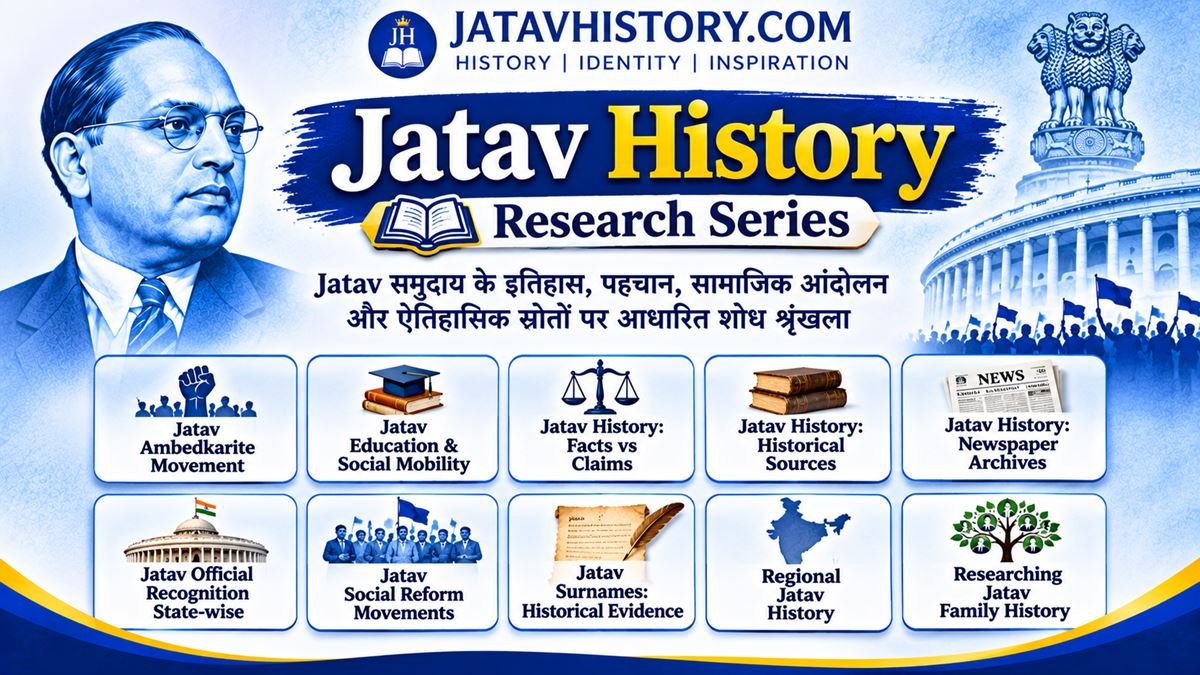
Explore Jatav history through research guides on historical sources, official records, social reform, education, surn...
Read more →
Complete State Wise SC Caste List in India 2026. Check Scheduled Caste communities State and Union Territory wise wit...
Read more →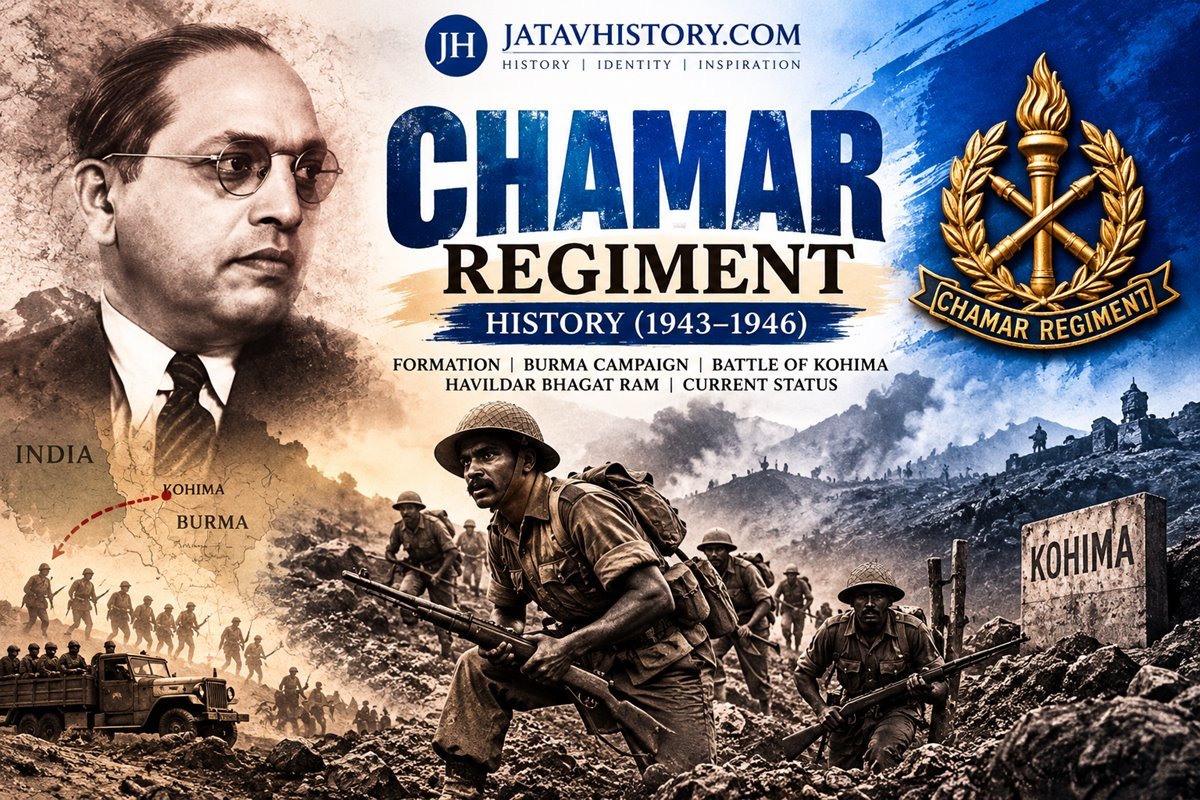
Learn the Chamar Regiment history (1943–1946), its World War II service in Burma, the Kohima campaign, Havildar Bhaga...
Read more → as
