
Jatav vs Chamar: Are Jatav and Chamar the Same?
 as

Are Jatav and Chamar the same? This is a question people often ask when they learn about these two community names. Some consider them the same, while others prefer to identify themselves separately. To understand why, we need to look at their history.

Jatav and Chamar have a strong historical connection, particularly in North India. Over the years, many people from the community started using the name Jatav as their identity. Today, both names are in use, and people may have different views about their connection.
Let's understand this in simple language, without confusion.
Are Jatav and Chamar the Same?
In many parts of North India, Jatav and Chamar are historically connected. The name Chamar has been used for a wider community, while Jatav developed as an important community identity among sections of that community.
This is why you may find people explaining that Jatav and Chamar are the same. There is a historical reason behind this understanding.
But there is one thing to remember: many people proudly identify themselves as Jatav and prefer this name. Others use the name Chamar. We should respect the identity people choose for themselves.
Jatav vs Chamar: What Is the Difference?
Let's look at the main points in a simple table. This will make the relationship easier to understand.
| Question | Answer |
|---|---|
| Are Jatav and Chamar historically connected? | Yes, they are closely connected in many parts of North India. |
| Are Jatav and Chamar the same? | In many historical and regional contexts, they are treated as connected identities. However, not everyone uses the names interchangeably. |
| Is Jatav a separate identity? | Yes. Many people identify themselves specifically as Jatav. |
| Why do some people use the name Jatav? | It is connected with community identity, social awareness and self-respect. |
| Do people still use both names? | Yes. Both names are used today, depending on family, region and personal identity. |
Who Are the Chamar?
Chamar is an old community name found in different parts of India, especially in North India. The community has its own long social and cultural history.
Traditionally, some members of the community were associated with leatherwork and footwear making. But this was only one part of their history. Today, people from the community work in every field, including education, government services, business, politics and many other professions.
It is not right to judge any community by the occupations associated with its past.
Who Are the Jatav?
Jatav is a well-known community identity, particularly in Uttar Pradesh and nearby regions. Many families identify themselves as Jatav and take pride in this name.
The Jatav identity became more prominent during the late nineteenth and early twentieth centuries. During this period, community leaders and organisations worked for education, social awareness and a better position in society.
For many people, the name Jatav is not just a surname or a label. It is an important part of their family background, history and identity.
Why Did Many People Adopt the Jatav Identity?
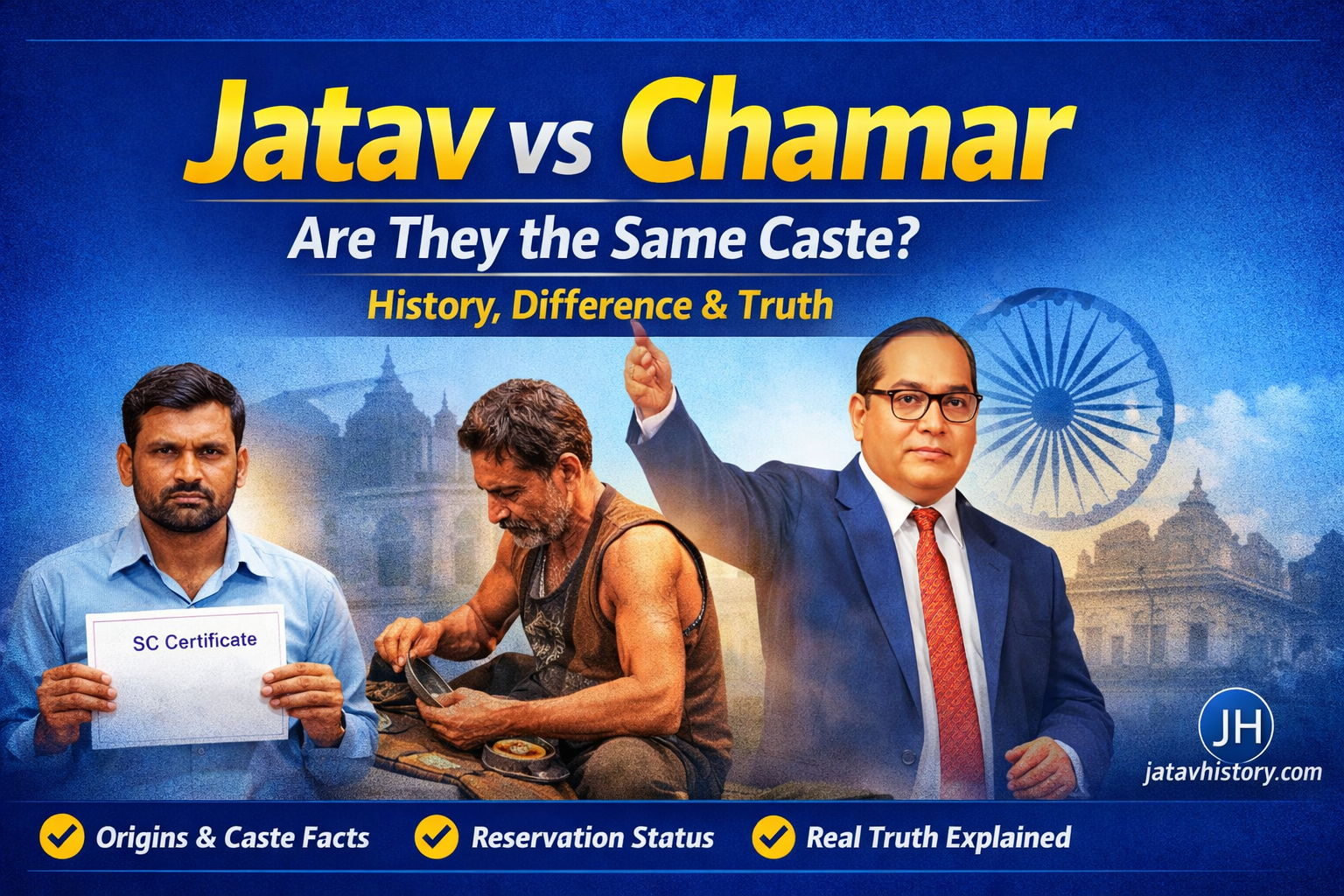
During the nineteenth and twentieth centuries, many communities in India started organising themselves and raising their voices against social discrimination. The Jatav community was also part of these social changes.
The use of the Jatav name grew through community organisation, social reform and the desire for a distinct identity.
For many families, this identity came to represent:
- Self-respect and dignity
- Education and awareness
- Community unity
- Social equality
- A distinct cultural and social identity
Every family has its own history. So, it is better not to assume that everyone has the same experience or follows the same identity.
Jatav and Chamar: Understanding Their Identity Today
Today, both Jatav and Chamar identities are present in Indian society. Many people from these communities have made their mark in education, government jobs, politics, sports, business and social work.
The important thing is to understand the history without creating unnecessary differences or disrespect. A person's identity should be respected, whether they use the name Jatav, Chamar or another name recognised in their own family and region.
Final Answer: Are Jatav and Chamar the Same?
Jatav and Chamar are historically connected identities in many parts of North India. The Jatav identity became widely used among sections of the community and is now an important identity in its own right.
So, when someone asks whether Jatav and Chamar are the same, the answer depends on the historical and regional context. Their connection is real, but we should not ignore the identity and choice of individual families.
Understanding history is important, but respecting every person's identity is equally important.
Read More on Jatav and Chamar History
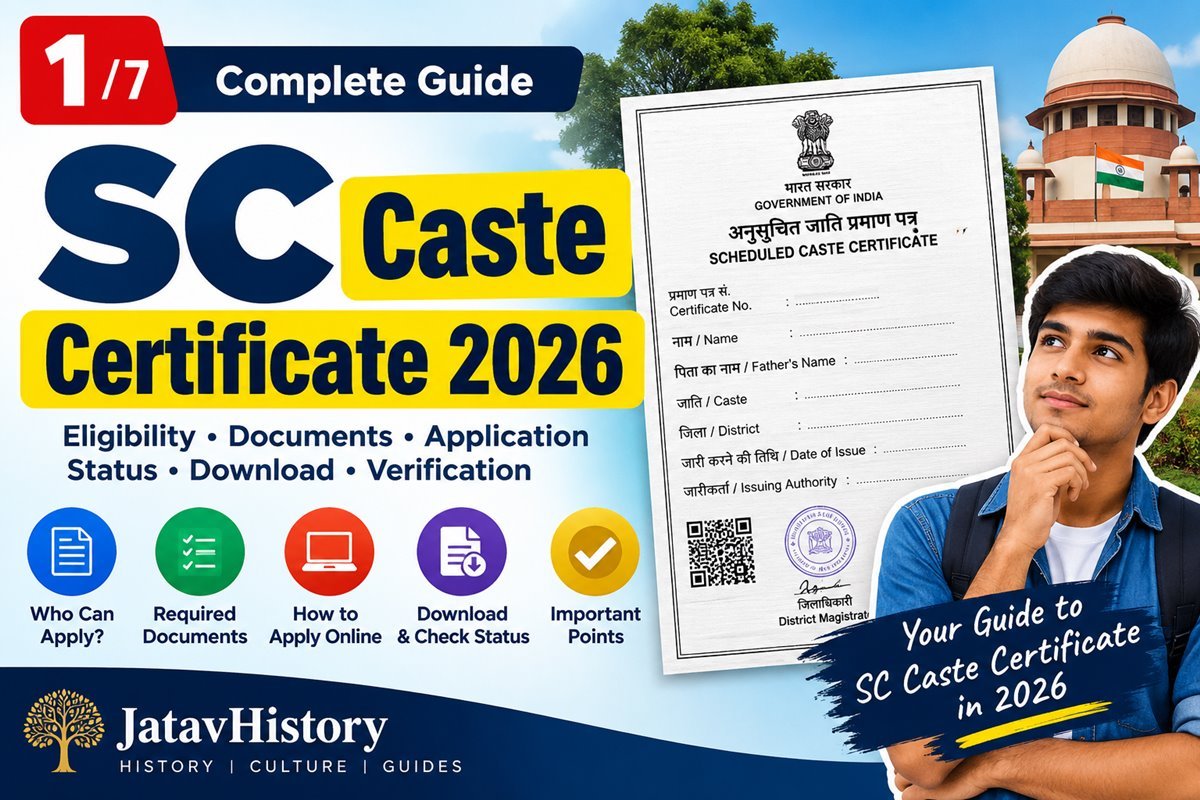
SC Caste Certificate 2026: Forms, Central, Digital, UP & Rajasthan Guides
Complete SC Caste Certificate 2026 guide covering SC certificate application, form, Central SC certificate, certifica...
Read more →
Dalit Population in India | State-wise Data, Growth & Demographics
Learn about the Dalit population in India, including state-wise distribution, census data, growth trends, socio-econo...
Read more →
Dalit History in India: Meaning, Leaders, Struggles & Social Movement
Dalit history in India explained in simple language. Learn Dalit meaning, origin, struggles against caste discriminat...
Read more →
Jatav History: Research, Records and Community History
Explore Jatav history through research guides on historical sources, official records, social reform, education, surn...
Read more →
State Wise SC Caste List in India 2026 – Complete List
Complete State Wise SC Caste List in India 2026. Check Scheduled Caste communities State and Union Territory wise wit...
Read more →
Chamar Regiment History (1943–1946): Burma, Kohima & Bhagat Ram
Learn the Chamar Regiment history (1943–1946), its World War II service in Burma, the Kohima campaign, Havildar Bhaga...
Read more →Frequently Asked Questions
Are Jatav and Chamar the same?
Jatav and Chamar have a close historical connection in many parts of North India. However, many people use Jatav as their distinct community identity, so both names should not automatically be treated as interchangeable for everyone.
What is the difference between Jatav and Chamar?
The difference is mainly related to community identity, regional history and personal preference. Jatav became a widely used identity among sections of the historically connected community.
Is Jatav a part of the Chamar community?
In many historical and regional contexts, Jatav communities have been associated with the broader Chamar community. The exact relationship and official terminology can vary by region.
Why do many people prefer the name Jatav?
Many families use the Jatav identity because of their community history, social awareness, self-respect and cultural identity.
Are Jatav and Chamar names still used today?
Yes. Both names are used today. The name a person or family uses depends on their background, region and personal identity.
Are Jatav and Chamar officially in the same category?
Scheduled Caste classification depends on the applicable state's official notification and the exact community entry. It is best to check the relevant government list for confirmation.